Home/Glossary
Glossary · 82 termsLandscaping, Lawn Care and Snow Removal Glossary
Plain definitions for the words you hear around lawns, beds, trimming, cleanups and snow, from aeration to zero-turn mowers. Search a term or browse by topic.
Aeration
Lawn healthPulling small plugs of soil out of the lawn so air, water and nutrients can reach the roots. Also called core aeration. For cool-season lawns in the Chicago area, early fall is the best time, with spring as a second option.
Aeration and power raking →Annuals
Mulch, sod and plantingPlants that live for one growing season, like petunias and impatiens. They give long-lasting color but need to be replanted every year. Around here they usually go in after the last frost, around mid-May.
Tree, shrub and flower planting →Arborvitae
Trimming and pruningA common evergreen shrub used for hedges and privacy screens in the western suburbs. It holds up well to trimming but can brown from winter wind and road salt.
Bush and hedge trimming →Backfill
Mulch, sod and plantingThe soil put back into a planting hole around a tree or shrub after it is set in place. It should be firmed gently to remove air pockets, then watered in.
Bagging
Lawn care and mowingCollecting grass clippings in a bag on the mower instead of leaving them on the lawn. Useful when the grass is very long or wet; otherwise clippings can usually be left to break down.
Balled and burlapped (B&B)
Mulch, sod and plantingA tree or shrub dug from a nursery field with its root ball wrapped in burlap. The burlap and any wire or twine at the top should be pulled back or removed at planting.
Tree, shrub and flower planting →Bed edging
Mulch, sod and plantingA clean cut line between a planting bed and the lawn, usually a few inches deep. It keeps grass out of the bed, holds mulch in place and makes the whole yard look sharper.
Mulch and sod →Broadleaf weeds
Lawn healthWeeds with wide leaves, such as dandelions, clover and plantain, as opposed to grassy weeds like crabgrass. They are treated differently from grassy weeds.
Brown patch
Lawn healthA fungal lawn disease that shows up as tan or brown circular patches in hot, humid summer weather. Watering in the evening and very tall, thick turf can make it worse.
Calcium chloride
Snow and iceAn ice melt that keeps working at much lower temperatures than rock salt and works faster. It costs more, and like all deicers it should be used sparingly near plants and concrete.
Snow removal →Clippings
Lawn care and mowingThe cut grass left after mowing. Short clippings left on the lawn break down quickly and return nutrients to the soil; they do not cause thatch on their own.
Lawn care →Commercial grounds maintenance
Equipment and landscape termsScheduled care of the outdoor areas of a business, HOA or multi-unit property: mowing, trimming, beds, cleanups and often snow removal, usually under a seasonal agreement.
Commercial landscaping →Compaction
Lawn healthSoil pressed so tightly by foot traffic, mowers or heavy clay that roots, air and water cannot move through it. Compacted lawns thin out and puddle after rain. Aeration is the main fix.
Aeration and power raking →Cool-season grass
Lawn care and mowingGrass types that grow best in spring and fall and slow down in summer heat, such as Kentucky bluegrass, perennial ryegrass and fescues. Nearly all lawns in the Chicago area are cool-season grass.
Lawn care →Crabgrass
Lawn healthA grassy summer weed that sprouts from seed each spring and spreads in thin, bare or scalped spots. A thick lawn mowed at the right height is the best defense.
Crown
Lawn healthThe base of a grass plant, right at the soil line, where new growth starts. Mowing too low or scalping can damage the crown and kill the grass.
Deadheading
Mulch, sod and plantingRemoving spent flowers from a plant to keep it looking tidy and, for many plants, to encourage more blooms.
Deicer
Snow and iceAny product spread on pavement to melt ice and snow, including rock salt, calcium chloride and magnesium chloride. Also called ice melt.
Snow removal →Dethatching
Lawn healthRemoving the layer of dead grass and stems that builds up at the soil line. Done with a power rake, so it is also called power raking.
Aeration and power raking →Dormancy
Lawn healthA resting state. Cool-season lawns can go brown and dormant during summer drought and green up again when rain returns. Trees, shrubs and lawns are also dormant through the winter.
Dormant seeding
Lawn healthSpreading grass seed in late fall once the soil is too cold for it to sprout. The seed sits through the winter and germinates in spring.
Drip line
Mulch, sod and plantingThe circle on the ground under the outer edge of a tree’s branches. Many of a tree’s feeding roots are found out to and beyond this line.
Driveway markers
Snow and iceTall, thin stakes placed along the edges of a driveway and walks before the ground freezes, so snow plows and snow blowers stay on the pavement instead of the lawn. Also called snow stakes.
Snow prep guide →Edging
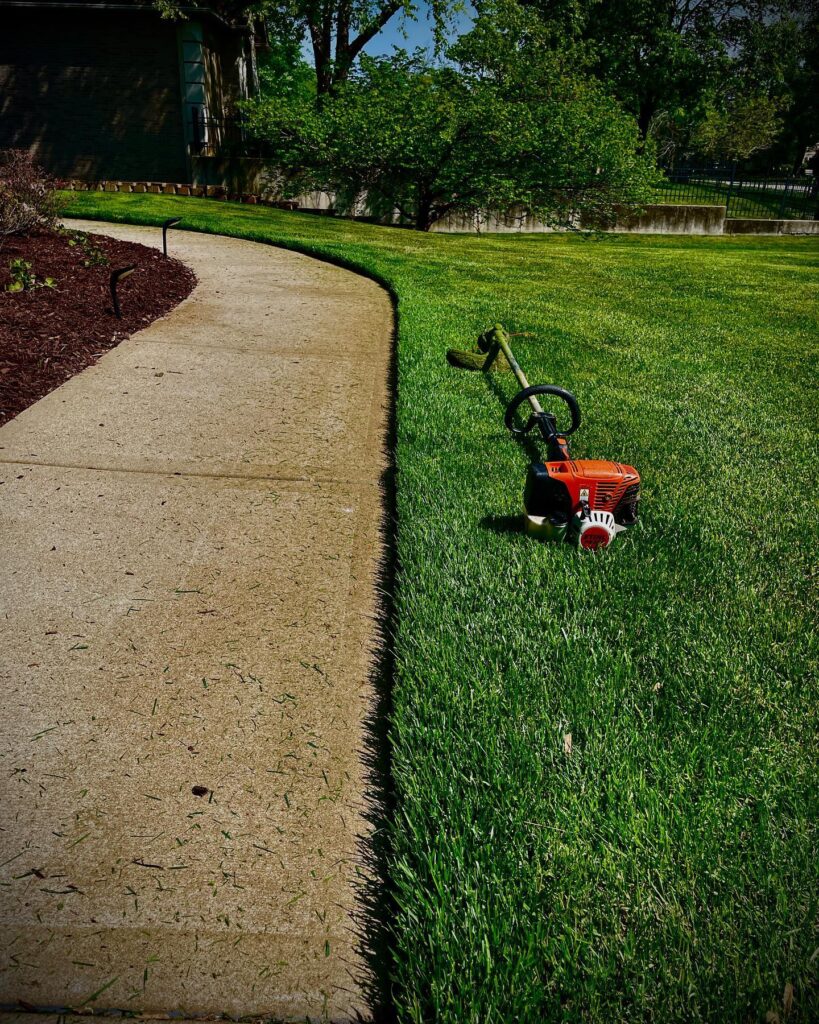
Lawn care and mowingCutting a clean vertical line where the lawn meets a sidewalk, driveway, curb or bed. Usually done with a string trimmer or a dedicated edger as part of weekly service.
Lawn care →Erosion
Equipment and landscape termsSoil washing or blowing away, often on slopes, bare spots or along downspouts. Healthy turf, mulch and plantings help hold soil in place.
Evergreen
Trimming and pruningA tree or shrub that keeps its leaves or needles all year, like arborvitae, yew, boxwood, spruce and pine.
Bush and hedge trimming →Fall cleanup
CleanupsA visit in mid to late fall to remove leaves from lawns and beds, cut back perennials and haul away yard waste before snow. Yards with mature trees often need two.
Spring and fall cleanups →Fertilizer (N-P-K)
Lawn healthPlant food labeled with three numbers for the percentage of nitrogen (N), phosphorus (P) and potassium (K). For lawns, nitrogen drives green leaf growth.
Fine fescue
Lawn care and mowingA group of cool-season grasses with very thin blades that tolerate shade better than most. Often mixed into seed blends for shady yards.
Foundation planting
Mulch, sod and plantingThe shrubs, perennials and other plants set along the base of a house or building. They soften the look of the foundation and frame the entrance.
Tree, shrub and flower planting →Frost heave
Equipment and landscape termsSoil expanding and shifting as it freezes and thaws, which can push up pavers, walkway stones and newly planted perennials over the winter.
Grading
Equipment and landscape termsShaping the slope of the ground, usually so that water drains away from the house and does not pool in the yard.
Ground cover
Mulch, sod and plantingLow plants that spread to cover the soil, such as pachysandra, vinca or creeping sedum. Useful on slopes and in shade where grass struggles.
Grub damage
Lawn healthLawn damage from white grubs, the larvae of beetles such as Japanese beetles, which feed on grass roots. Damaged turf turns brown and can be peeled back like a loose carpet, often in late summer.
Hardiness zone
Mulch, sod and plantingA rating from the USDA based on average winter low temperatures, used to pick plants that will survive the winter. Most of DuPage County falls in zone 5b to 6a.
Tree, shrub and flower planting →Hardscape
Equipment and landscape termsThe non-living parts of a landscape: patios, walkways, retaining walls, edging stones and driveways. The plants are called the softscape.
Hedge
Trimming and pruningA row of shrubs planted close together and trimmed into a continuous wall or border. Trimming a hedge slightly narrower at the top than the bottom keeps the lower branches full.
Bush and hedge trimming →Ice melt
Snow and iceProducts spread on pavement to melt ice, including rock salt, calcium chloride and magnesium chloride. More is not better; the excess ends up in nearby lawns and beds. StoneRidge applies ice melt on request.
Snow removal →Kentucky bluegrass
Lawn care and mowingThe most common lawn grass in northern Illinois. It spreads to fill in bare spots, has a rich color and handles cold winters well, but prefers sun.
Lawn care →Landscape fabric
Mulch, sod and plantingA woven or non-woven sheet laid under mulch or stone to slow weeds. It works best under stone; under organic mulch, weeds often root right on top of it over time.
Lawn striping
Lawn care and mowingThe light and dark stripes on a freshly mowed lawn. They come from the grass blades being bent in alternate directions as the mower goes back and forth.
Lawn care →Leaf mulching
CleanupsRunning a mower over a light layer of fallen leaves to chop them into small pieces that settle into the lawn and break down. Works when you can still see plenty of grass through the leaves.
Fall leaf cleanup guide →Magnesium chloride
Snow and iceAn ice melt that works at lower temperatures than rock salt and is generally considered gentler on plants and concrete than sodium chloride.
Snow removal →Mowing height
Lawn care and mowingHow tall the grass is left after mowing. For cool-season lawns, roughly 3 to 3.5 inches during the season, a little higher in summer heat, and around 2.5 to 3 inches for the final fall cut.
Lawn care →Mulch
Mulch, sod and plantingA layer of material, usually shredded hardwood, spread over planting beds to hold moisture, slow weeds and give a finished look. Two to three inches is usually enough.
Mulch and sod →Mulch volcano
Mulch, sod and plantingMulch piled high against the trunk of a tree. It traps moisture against the bark and can lead to rot and pests. Mulch should be pulled back a few inches from trunks.
Mulch and sod →Mulching mower
Equipment and landscape termsA mower that cuts clippings into fine pieces and drops them back into the lawn instead of bagging or side-discharging them.
Native plants
Mulch, sod and plantingPlants that grew naturally in the region before settlement, such as coneflower, little bluestem and serviceberry in northern Illinois. Once established, they are usually well adapted to local weather and soil.
One-third rule
Lawn care and mowingNever cutting off more than one third of the grass blade in a single mowing. Cutting more stresses the lawn and can leave it brown and thin.
Lawn care →Ornamental grass
Mulch, sod and plantingTall decorative grasses, such as feather reed grass or switchgrass, grown in beds rather than as lawn. Usually cut back in late winter or early spring.
Overseeding
Lawn healthSpreading grass seed over an existing lawn to thicken it up. Most effective in late summer to early fall, often right after aeration.
Aeration and power raking →Perennial ryegrass
Lawn care and mowingA cool-season grass that sprouts quickly and is often mixed with Kentucky bluegrass in seed blends for fast cover.
Perennials
Mulch, sod and plantingPlants that come back every year from the same roots, like hostas, daylilies and coneflowers. Most die back to the ground in winter and regrow in spring.
Tree, shrub and flower planting →Plow trigger
Snow and iceThe snow depth at which plowing or clearing starts, set in a snow service agreement. Commonly an inch or two, though it varies.
Snow removal →Power raking
Lawn healthUsing a machine with spinning blades to pull built-up thatch out of a lawn. Also called dethatching.
Aeration and power raking →Pre-emergent
Lawn healthA weed control product applied before weed seeds sprout, most often used against crabgrass in spring. It does not kill weeds that are already growing.
Pruning
Trimming and pruningSelectively cutting branches to improve a plant’s health, shape or flowering. Different from shearing, which trims the outer surface into a shape.
Bush and hedge trimming →Rock salt
Snow and iceSodium chloride, the most common and least expensive ice melt. It works poorly in very cold weather and can damage grass, plants and concrete.
Snow removal →Root ball
Mulch, sod and plantingThe mass of roots and soil that comes with a tree or shrub from the nursery container or field.
Tree, shrub and flower planting →Root flare
Mulch, sod and plantingThe spot where a tree’s trunk widens into its roots. It should sit at or slightly above the soil line when planted; trees planted too deep often struggle.
Tree, shrub and flower planting →Salt damage
Snow and iceBrowning of grass and evergreens along driveways, walks and roads from deicing salt in spray or meltwater. Using less salt and keeping it off beds helps.
Scalping
Lawn care and mowingMowing so low that the grass is cut down to the crown or stems, leaving brown, bare-looking patches. Common on uneven ground or with a mower set too low.
Seasonal service agreement
Snow and iceAn arrangement for regular service through a season, such as weekly mowing or winter snow removal, so the property stays on the schedule without calling each time.
Snow removal →Shearing
Trimming and pruningTrimming the outer surface of a shrub or hedge into a formal shape with hedge trimmers. Best for hedges and formal shrubs.
Bush and hedge trimming →Shrub
Trimming and pruningA woody plant with several stems, smaller than a tree, such as boxwood, lilac, spirea or hydrangea.
Bush and hedge trimming →Snow mold
Lawn healthA lawn disease that appears in early spring as gray or pinkish matted patches where snow sat the longest. Leaves left on the lawn and grass left too long in fall make it more likely.
Fall leaf cleanup guide →Snow stacking
Snow and iceWhere cleared snow gets piled. Good spots are away from shrubs, storm drains and places where meltwater would refreeze across walks or driveways.
Snow prep guide →Sod
Mulch, sod and plantingStrips of mature grass with soil and roots attached, laid like a carpet to create an instant lawn or repair bare spots. New sod needs frequent watering for the first couple of weeks.
Mulch and sod →Soil test
Lawn healthA lab test of a soil sample that shows pH and nutrient levels, so fertilizer and amendments can be matched to what the soil actually needs.
Spring cleanup
CleanupsThe first visit of the year, usually late March or April, to clear winter debris, matted grass and dead stems, edge the beds and get the property ready for the season.
Spring and fall cleanups →String trimmer
Equipment and landscape termsA handheld tool that cuts grass with a spinning nylon line, used around fences, trees, beds and other spots a mower cannot reach. Also called a weed eater or weed whacker.
Lawn care →Tall fescue
Lawn care and mowingA cool-season grass with wider blades and deep roots that handles heat, drought and some shade better than Kentucky bluegrass.
Thatch
Lawn healthA layer of dead grass stems and roots between the green blades and the soil. A thin layer is normal; more than about half an inch blocks water and nutrients.
Aeration and power raking →Topdressing
Lawn healthSpreading a thin layer of compost or soil over the lawn to improve the soil and smooth out low spots, often together with overseeding.
Topsoil
Mulch, sod and plantingThe upper layer of soil, richest in organic matter. Used to fill low areas, prepare ground for sod or seed and build up beds.
Mulch and sod →Transplant shock
Mulch, sod and plantingStress a plant goes through after being moved or planted, showing as wilting or yellowing leaves. Regular watering through the first season helps it recover.
Tree, shrub and flower planting →Turf
Lawn care and mowingAnother word for lawn: grass plants together with the soil and roots they grow in.
Lawn care →Weed control
Lawn healthKeeping weeds out of lawns and beds, through healthy thick turf, mulch, hand pulling and, where needed, weed control products.
Windrow
Snow and iceThe ridge of heavy snow a plow leaves along the side of the road or at the end of a driveway.
Snow removal →Winter burn
Trimming and pruningBrowning of evergreens in late winter caused by dry wind and sun pulling moisture from leaves and needles while the ground is frozen. Deep watering before the ground freezes helps.
Fall lawn care checklist →Yard waste
CleanupsLeaves, grass clippings, branches and other plant debris. Fall and spring cleanups include hauling it away.
Spring and fall cleanups →Zero-turn mower
Equipment and landscape termsA riding mower that can spin in place, making it fast and precise on larger lawns and around obstacles.
Lawn care →No terms match that search. Try another word, or ask us.
Have a question we did not cover?
Ask us about your lawn, beds or snow plans. Estimates are free.